O'Hare Security Lines: Beat The Crowd
O'Hare security lines are a major concern for travelers navigating one of the busiest airports in the world. Whether you're flying out of Terminal 1, 2, 3, or 5, understanding how ORD security checkpoints operate can mean the difference between a relaxed departure and a sprint to your gate. This guide covers everything you need to know about O'Hare airport security wait times, the factors that affect them, and practical strategies to minimize your time in line.
Key Takeaways
- O'Hare security lines vary significantly by terminal, time of day, and day of the week.
- TSA PreCheck and CLEAR can dramatically reduce wait times, but availability varies by terminal.
- The best overall strategy is to check live wait times and arrive at the right terminal at the right time.
- Terminal 5 (international) has unique security characteristics compared to Terminals 1, 2, and
- Knowing what to do when you hit a long line can save you from missing a flight.
Quick Answer: O'Hare security lines are the queues at the four passenger terminals of Chicago O'Hare International Airport (ORD). Wait times depend on your terminal, time of day, and whether you have TSA PreCheck or CLEAR access.
The Complete Answer: What to Expect from O'Hare Security Lines
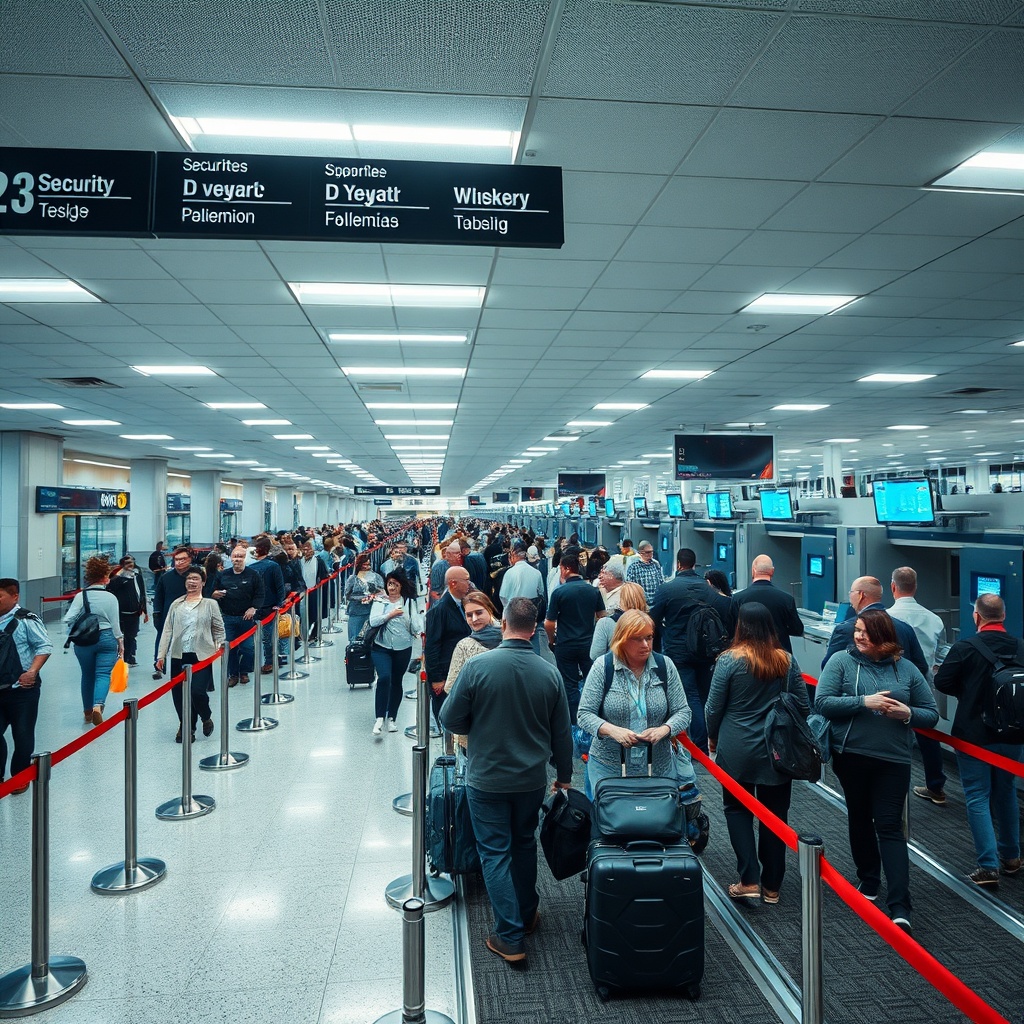
Travelers navigate the O'Hare security lines at one of the airport's busy checkpoints.
The Short Answer: What You Need to Know
O'Hare security lines are the screening checkpoints every passenger must pass through before reaching their gate at Chicago O'Hare International Airport. The airport operates four passenger terminals—1, 2, 3, and 5—each with its own security checkpoint configuration.
The single most important thing to remember is that wait times are not uniform. A 10-minute wait at Terminal 3 on a Tuesday afternoon can become a 45-minute wait at Terminal 1 on a Monday morning. Checking live wait times before you leave for the airport is the most reliable way to plan your arrival.
Definition: O'Hare airport security wait times are the estimated minutes a passenger can expect to spend from entering the TSA checkpoint queue to clearing screening at Chicago O'Hare International Airport (ORD).
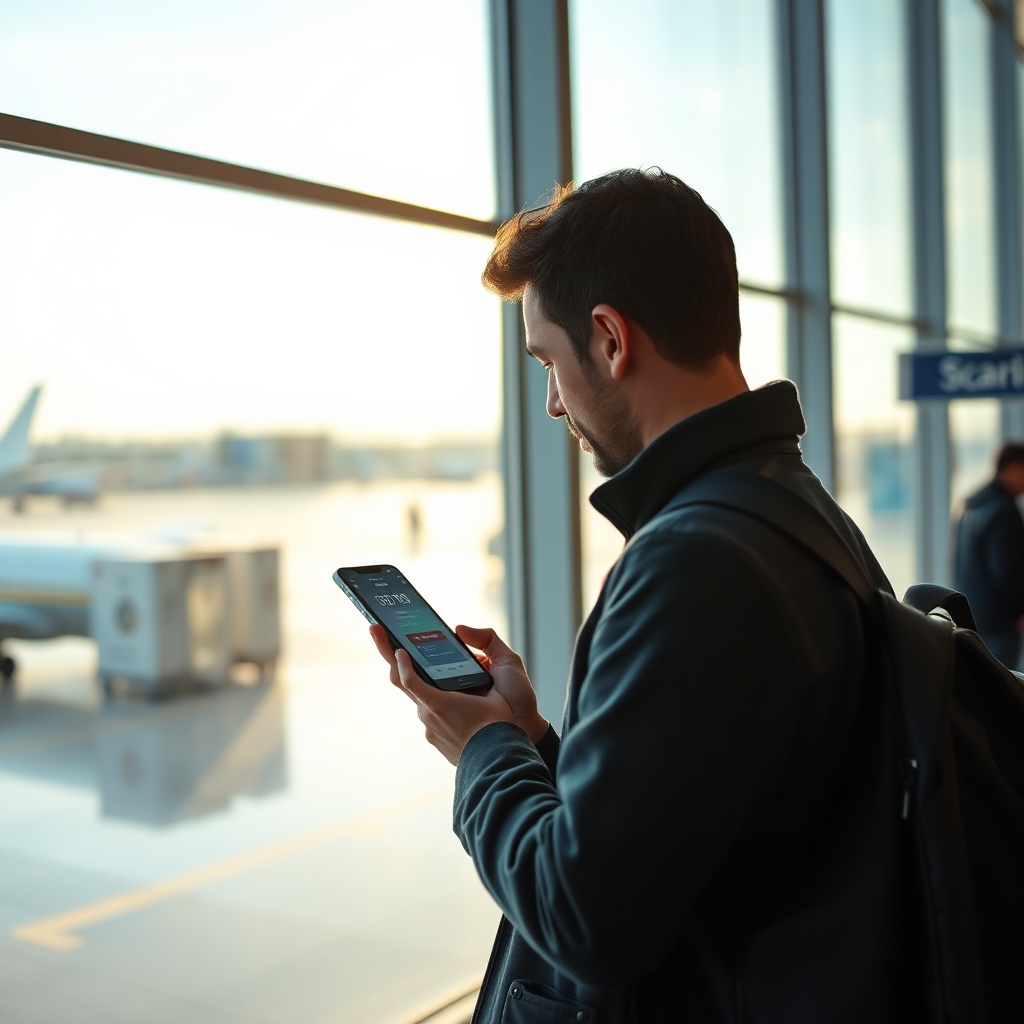
A passenger checks live wait times to plan their O'Hare security lines experience.
The Key Factors That Determine Your Wait Time
Several variables influence how long you'll wait in an O'Hare security line:
- Time of day: Early morning and late afternoon are typically the busiest windows due to the banked departure schedules of major airlines.
- Day of the week: Mondays and Fridays tend to be heavier than midweek days, though this can shift during holiday periods.
- Terminal: Each terminal has a different passenger volume and checkpoint layout, which directly affects line speed.
- Season: Summer travel months and winter holidays bring significantly more passengers through ORD.
- Screening status: Travelers with TSA PreCheck or CLEAR access move through dedicated lanes that are substantially faster than standard screening.
A Realistic Timeline for Your Security Experience
Moving through an O'Hare security checkpoint involves more than just The Line itself. The typical process includes:
- Queue entry: Joining the line outside or near the checkpoint entrance.
- ID verification: Presenting your boarding pass and government-issued ID to a TSA officer.
- Carry-on screening: Placing your bags and personal items through the X-ray machine.
- Walk-through metal detector or body scanner: Passing through the screening equipment.
- Retrieving your items: Collecting your belongings on the other side.
- Walking to your gate: The distance from the checkpoint to your gate can add several minutes to your total time.
The time from entering the checkpoint to clearing screening can range from a few minutes during quiet periods to well over half an hour during peak travel times. After clearing security, you still need to account for walking time to your gate, which varies by terminal.
How O'Hare Security Lines Actually Work
Standard TSA Screening at O'Hare
Standard TSA screening at O'Hare follows the same process used at airports nationwide. You'll present your ID and boarding pass to a TSA officer, then place your carry-on bags, liquids, and electronics through the X-ray machine. You'll walk through a metal detector or advanced imaging technology scanner.
TSA officers at O'Hare are responsible for managing the flow of passengers through the checkpoint, directing travelers to available lanes, and conducting additional screening when needed. During peak periods, the airport can open additional lanes to handle the volume, but staffing levels ultimately determine how many lanes operate at any given time.
TSA PreCheck and CLEAR at O'Hare
Definition: TSA PreCheck is a trusted traveler program that allows pre-approved passengers to use expedited security lanes with faster screening, no need to remove shoes, belts, or light jackets, and laptops and liquids kept in bags.
Definition: CLEAR is a private biometric identity verification service that lets members bypass the ID-checking line and proceed directly to the physical screening area.
TSA PreCheck is available at all O'Hare terminals, and the expedited lanes operate during the same hours as the standard checkpoints. Enrollment in TSA PreCheck costs $78 for a five-year membership. If you already have TSA PreCheck, look for the dedicated lane at your terminal's checkpoint.
CLEAR lanes are also available at O'Hare, allowing members to verify their identity using a biometric kiosk rather than waiting for a TSA officer to check documents. CLEAR is a paid subscription service with an annual membership fee. Note that CLEAR gets you to the front of the line, but you still need TSA PreCheck (or standard screening) to clear the physical screening process.
How O'Hare's Checkpoint Layout Affects Line Speed
The physical layout of each O'Hare checkpoint influences how quickly lines move. Some terminals have wide, open checkpoint areas that allow multiple lanes to operate efficiently, while others have more constrained spaces that can create bottlenecks.
Terminal 1, which serves United Airlines, has a large checkpoint that can handle significant volume but also sees some of the highest passenger traffic. Terminal 3, home to American Airlines, has a similar high-volume setup. Terminal 5, the international terminal, has a different flow because it processes both departing international passengers and arriving passengers who may need to clear customs and security again.
The layout also affects how TSA officers can direct traffic. When one lane becomes backed up, officers can open additional lanes or redirect passengers to less congested checkpoints within the same terminal.
The Best Times to Fly Through O'Hare
Peak Hours and Days to Avoid
O'Hare operates on a hub-and-spoke model, meaning airlines schedule large banks of flights at specific times of day. This creates predictable surges in passenger volume. The busiest periods are typically:
- Early morning: Roughly 5:00 AM to 8:00 AM, when the first wave of domestic departures launches.
- Late afternoon: Roughly 3:00 PM to 7:00 PM, when the evening departure bank begins.
Mondays and Fridays are generally the busiest days for leisure and business travel. Sunday evenings also see heavy traffic as travelers return from weekend trips.
Seasonal and Event-Driven Surges
Holiday periods bring the highest passenger volumes to O'Hare. The days surrounding Thanksgiving, Christmas, and New Year's are consistently the busiest of the year. Summer vacation months from June through August also see elevated traffic.
Major events in Chicago, such as large conventions at McCormick Place or major sporting events, can produce localized surges. If you're flying during a known event weekend, plan for longer lines even outside the typical peak hours.
The Early Morning Advantage
Flying early has a distinct advantage at O'Hare, but it comes with trade-offs. The first flights of the day often depart from gates that are already staffed, and security checkpoints open early to accommodate them. If you're on a 6:00 AM flight and arrive at the checkpoint by 4:30 AM, you'll likely face a shorter line than someone flying at noon.
The trade-off is that early morning flights are more sensitive to delays. If your flight is canceled, there may be fewer alternative options available later in the day. Still, for passengers who value predictability, the early morning window is often the best choice.
Quick Answer: The Best Time to Visit Marrakech: Weather, Crowds and Airport Tr to fly through O'Hare to minimize security wait times is generally early morning before 8:00 AM or mid-afternoon between 10:00 AM and 2:00 PM, avoiding the peak early morning and late afternoon departure banks.
Terminal-by-Terminal Security Line Strategies
Terminal 1 and 2 Security Lines
Terminal 1 is the primary hub for United Airlines at O'Hare. It features a large security checkpoint that can handle substantial passenger volume, but it also experiences some of the longest lines during peak departure times. The checkpoint is located on the upper level, and TSA PreCheck lanes are available.
Terminal 2 serves as a secondary hub for United and also handles Delta and Alaska Airlines flights. The security checkpoint in Terminal 2 is generally less congested than Terminal 1, making it a good option if your airline operates from this terminal.
Terminal 3 Security Lines
Terminal 3 is the home of American Airlines at O'Hare. The security checkpoint is large and well-designed to handle high volumes. During peak hours, American's hub operations create significant passenger flow, but the checkpoint's layout allows TSA officers to open multiple lanes quickly.
One advantage of Terminal 3 is that it has a more centralized checkpoint area, which can help distribute passengers more evenly across lanes compared to some other terminals.
Terminal 5 (International) Security Lines
Terminal 5 is O'Hare's international terminal, serving airlines like British Airways, Lufthansa, and Emirates, among others. The security setup at Terminal 5 is unique because it handles both departing international passengers and arriving international passengers.
Arriving international passengers who have connecting flights must clear customs and then go through security again if they have checked bags to re-check. This creates a distinct flow that differs from the domestic terminals. Departing passengers at Terminal 5 go through a standard TSA checkpoint, but the international nature of the flights means that passengers often have larger bags and more complex itineraries.
Quick Answer: Terminal 5 at O'Hare is unique because it processes both international departures and arriving passengers who need to re-clear security after customs, creating a different flow from the domestic terminals.
Comparison Table: O'Hare Terminals at a Glance
| Terminal | Primary Airline | TSA PreCheck | CLEAR | Unique Characteristics |
|---|---|---|---|---|
| United Airlines | Yes | Yes | Highest passenger volume; large checkpoint on upper level | Terminal 2 |
| United, Delta, Alaska | Yes | Yes | Generally less congested; good if your airline operates here | Terminal 3 |
| American Airlines | Yes | Yes | Large centralized checkpoint; efficient lane management | Terminal 5 |
| International carriers | Yes | Yes | Handles international departures and connecting passengers re-clearing security |
What to Do When You Hit a Long Security Line
Step-by-Step: What to Do When You're Stuck in a Long Line
- Check the live wait time on the O'Hare app or website to see if your terminal's checkpoint has improved or if another checkpoint is moving faster.
- Look for alternative checkpoints within the same terminal. Some terminals have multiple security entrances, and one may be less congested.
- Ask a TSA officer if there are shorter lines for your boarding pass type, such as a separate lane for first-class or priority passengers.
- Consider using the CLEAR or TSA PreCheck lane if you have access. Even if you didn't plan to use it, showing your membership can get you into a faster line.
- Contact your airline if you are at risk of missing your flight. Airline staff can sometimes expedite you through security or make arrangements for a later flight.
- Use the airline's rebooking app or phone line if you miss the flight. Most major airlines allow you to rebook directly from your phone without waiting in line at the gate.
How to Use the O'Hare Wait Time App
O'Hare provides live security wait times through its official website and mobile app. To access the information, you'll typically need to select your terminal and the time you expect to arrive. The airport publishes estimated wait times for standard and TSA PreCheck lanes, allowing you to make an informed decision about when to leave for the airport.
The app also provides real-time updates on checkpoint status, so you can check again once you're at the airport. If the wait time is longer than expected, you can use this information to adjust your strategy.
Your Rights and Options When You're at Risk of Missing a Flight
If the security line is moving too slowly and you're at risk of missing your flight, your best option is to speak directly with airline staff. Gate agents and customer service representatives can sometimes help you get through security faster or arrange a seat on a later flight.
It's important to note that airlines are generally not responsible for passengers who miss flights due to security delays, unless the delay was caused by the airline itself. However, most airlines will work with you to rebook on the next available flight, especially if you approach them before the flight departs.
Frequently Asked Questions
Q1: How early should I arrive at O'Hare for a flight?
The general recommendation is to arrive at O'Hare at least two hours before a domestic flight and three hours before an international flight. This gives you enough time to check in, drop off bags, and clear security, even during peak periods. Checking live wait times before you leave can help you adjust this window.
Q2: Is TSA PreCheck worth it at O'Hare?
TSA PreCheck costs $78 for a five-year membership, which works out to roughly $15.60 per year. At O'Hare, PreCheck lanes are consistently faster than standard screening, significantly reducing wait times during peak periods. For frequent travelers, the time savings and convenience of not removing shoes, belts, or laptops make it a worthwhile investment.
Q3: Are O'Hare security lines shorter in the morning?
Morning security lines at O'Hare follow a specific pattern. The very early morning hours, before 5:00 AM, are typically quiet. As the morning departure bank builds between 5:00 AM and 8:00 AM, lines grow longer. If you're flying before 6:00 AM, you'll likely face shorter lines than someone flying at 7:00 AM or 8:00 AM.
Q4: What is the fastest security checkpoint at O'Hare?
The fastest security checkpoint at O'Hare depends heavily on the time of day and your airline. In general, Terminal 2 tends to be less congested than Terminal 1 or 3 because it handles fewer flights. Terminal 5 can be fast on days with light international traffic but can become very busy during international departure banks. Checking live wait times is the most reliable way to determine which checkpoint is moving fastest at any given moment.
Q5: Can I use the O'Hare security line if I have a connecting flight?
Yes, connecting passengers at O'Hare who are staying within the airport do not need to go through security again. However, if you arrive on an international flight and have a connecting domestic flight, you must clear customs, re-check any checked bags, and go through security again at the domestic terminal. This process can take significant time, so allow extra buffer for international connections.
Related reading: How To Navigate O'Hare Terminals Easily · O'Hare Customs And Immigration: 5 Ways To Skip The Line
Conclusion
O'Hare security lines are a reality for every traveler passing through Chicago's primary airport, but they don't have to ruin your travel day. The key is understanding the variables that affect wait times—terminal, time of day, day of the week, and whether you have expedited screening access.
Your best strategy is preparation and flexibility. Check live wait times before you leave for the airport, arrive at the right terminal at the right time, and take advantage of TSA PreCheck or CLEAR if you have them. If you hit a long line, stay calm, use the airport's tools to find a faster option, and communicate with your airline if you're at risk of missing your flight.
By knowing what to expect and having a plan, you can navigate O'Hare security lines with confidence and focus on the more enjoyable parts of your journey.