How To Beat Chicago Airport Weather Delays
Chicago airport weather is the single most disruptive factor for travelers passing through the region, affecting flight schedules at both O'Hare International Airport (ORD) and Midway International Airport (MDW) in ways that ripple across the entire national airspace system. These two major hubs sit in the same metropolitan area but experience distinct microclimates shaped by Lake Michigan, continental air masses, and prevailing wind patterns. This guide provides a definitive, actionable breakdown of Chicago airport weather patterns, their operational impacts, and how to prepare for them.
Key Takeaways
- Lake-effect and microclimates: Chicago's proximity to Lake Michigan creates distinct weather patterns at O'Hare (ORD) and Midway (MDW) that can differ significantly from the city center.
- Winter is the operational bottleneck: Snow and ice are the primary causes of flight delays and cancellations, with ORD being particularly susceptible due to its high traffic volume.
- Summer brings thunderstorms, not heat: The primary summer threat is convective storms (thunderstorms) that can cause ground stops, especially during late afternoon and evening hours.
- Real-time monitoring is essential: Relying on static forecasts is insufficient; travelers must use live radar, airport-specific METARs, and FAA status pages for accurate, up-to-the-minute information.
- Preparation is the best mitigation: Knowing the seasonal risks and having contingency plans (e.g., travel insurance, flexible bookings) can significantly reduce the stress of weather-related disruptions.
The Complete Answer: What Is the Weather Like at Chicago's Airports?
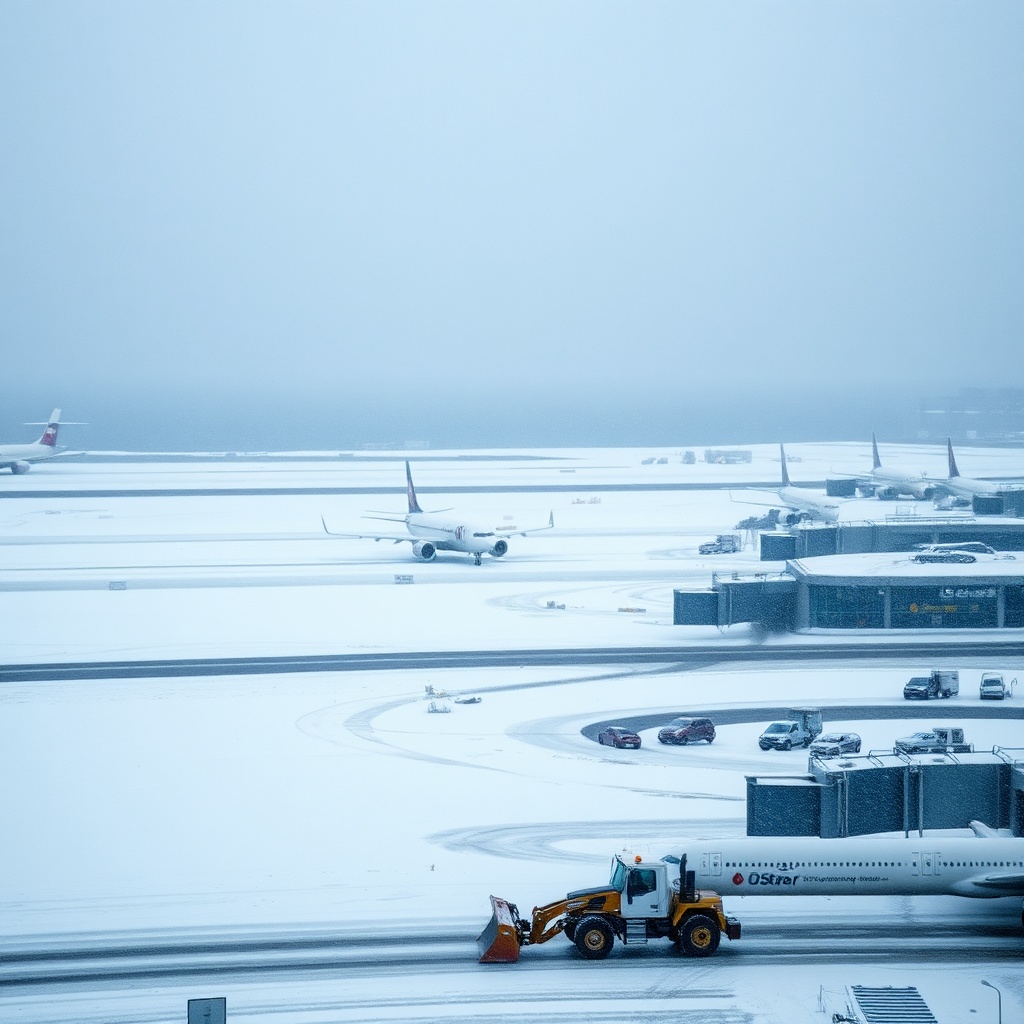
A snowy scene depicting the challenges of winter weather at Chicago's major airport, with snowplows and aircraft in a cold, gray setting.
The Definitive Overview of ORD and MDW Climates
The answer to "what is the weather like in Chicago" is not a single, uniform report. O'Hare and Midway operate under the influence of a humid continental climate, characterized by hot, humid summers and cold, snowy winters. However, the specific conditions at each airport are shaped by their distance from Lake Michigan and their orientation relative to prevailing winds.
O'Hare, located about 17 miles northwest of downtown, is more exposed to the full range of continental weather extremes. Midway, situated closer to the lakefront, often feels the moderating influence of the water more directly. This means that on a given day, the O'Hare weather forecast and the Midway Airport weather report can show meaningful differences in temperature, wind speed, and visibility, even though the airports are only about 15 miles apart.
Quick Answer: The weather at O'Hare (ORD) and Midway (MDW) is not identical. O'Hare tends to experience more extreme temperatures and is more exposed to lake-effect snow, while Midway is often slightly moderated by its proximity to Lake Michigan.
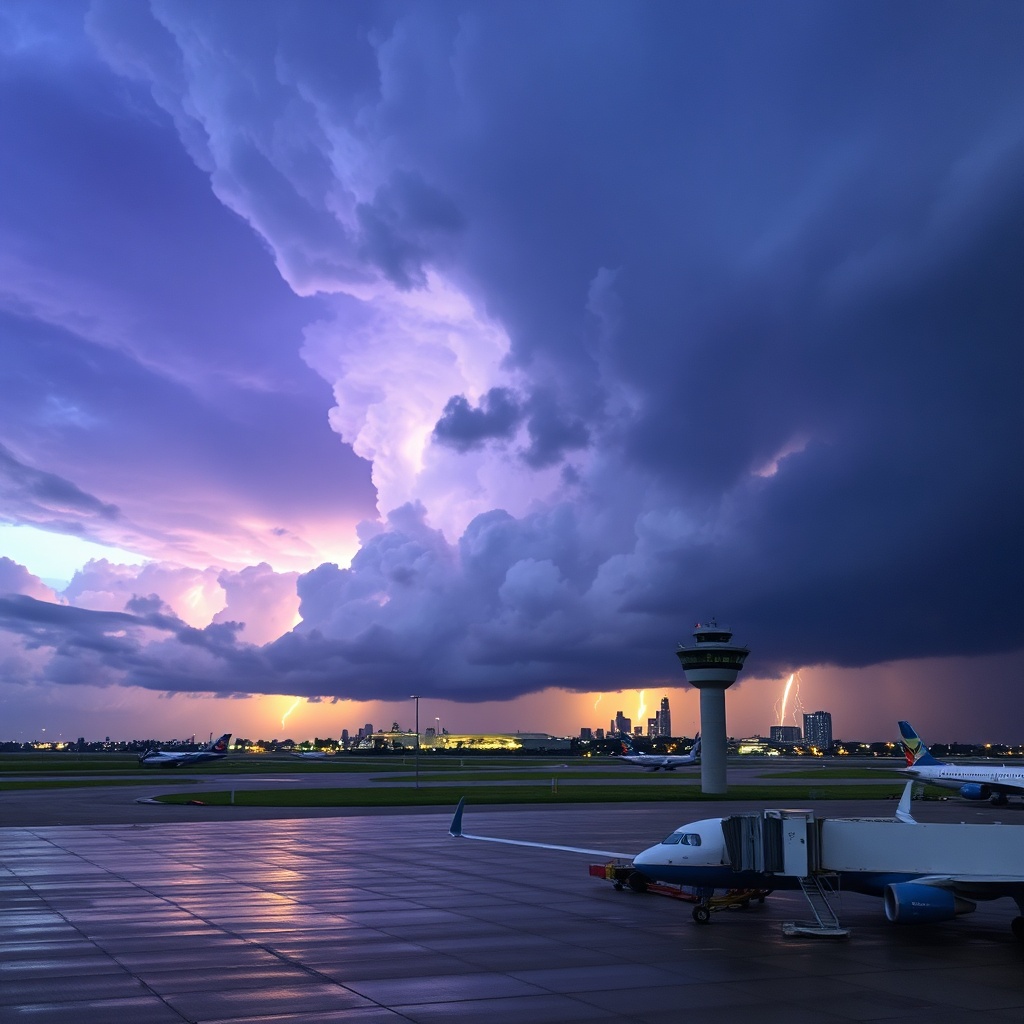
A dramatic summer storm approach over Midway airport, with lightning, wet tarmac, and a dark sky, illustrating the thunderstorm threat to air travel.
The Lake Michigan Effect: Why the Airports Differ from Downtown
Lake Michigan acts as a massive temperature buffer for the immediate shoreline. During summer, the lake keeps lakeside areas cooler than inland locations; during winter, it can keep them slightly warmer. This moderating effect is strongest right on the shore and weakens with distance inland.
The prevailing wind pattern in Chicago is typically from the west or northwest. When these winds blow across the relatively warm lake surface during cold winter months, they pick up moisture and heat, which then rises and forms clouds and precipitation as the air moves over the colder land. This is the mechanism behind lake-effect snow. Because the wind direction is often westerly, this moisture is pushed directly over the airports, particularly O'Hare, which sits squarely in the path of this lake-influenced air mass. This explains why a snowstorm Chicago airport event can sometimes be more intense at ORD than in downtown or at Midway.
Definition: Lake-effect snow is a weather phenomenon where cold air moving over relatively warm lake water picks up moisture, which then falls as heavy, localized snow when the air reaches the colder landmass.
Comparative Weather Table: ORD vs. MDW
| Weather Element | O'Hare (ORD) Typical Characteristics | Midway (MDW) Typical Characteristics | Impact on Travel |
|---|---|---|---|
| Higher accumulation from lake-effect events due to northwestern exposure; more frequent need for major snow removal operations. | Generally less snow from lake-effect events, but still susceptible to heavy snow from large synoptic systems. | Both cause delays and cancellations, but ORD's higher volume amplifies the impact on the national network. | **Summer Thunderstorms** |
| High frequency of afternoon/evening convective storms, often triggered by lake breeze fronts. | Similar frequency, but the lake breeze can sometimes delay or weaken storm development closer to the shore. | Both lead to ground stops, but ORD's larger hub operation makes it more likely to cause cascading, nationwide delays. | **Fog** |
| Can experience dense fog, especially in fall and spring, reducing visibility. | Also prone to fog, sometimes more so due to its closer proximity to the lake. | Low visibility can significantly reduce arrival and departure rates, causing delays. | **Wind** |
| Exposure to strong gusts, particularly from the northwest in winter and from thunderstorms in summer. | Also exposed to strong winds, but with slightly different patterns due to its location. | High crosswinds can restrict runway usage, leading to delays or diversions. |
Seasonal Weather Patterns and Their Operational Impact
Winter (December - February): The Snow and Ice Challenge
Winter is the most significant operational bottleneck for Chicago airport weather. The challenge is not just the snow itself, but the complex procedures required to clear it and keep aircraft safe. O'Hare has an extensive snow removal fleet and a detailed plan to keep runways open, but the sheer volume of traffic means that even a temporary closure of one runway can have a "snowball effect" on flight schedules.
When a runway closes for snow removal, the airport's capacity drops dramatically. Aircraft that are already in the air must be held or diverted, and aircraft on the ground are delayed. This single event can cascade into nationwide delays, as aircraft and crews scheduled to fly out of Chicago are late for their subsequent flights. Additionally, de-icing operations add significant time to the departure process. Aircraft must be sprayed with de-icing fluid to remove snow and ice from critical surfaces, and this process, while essential for safety, creates a queue that can stretch for hours during a major snowstorm.
Quick Answer: During a winter storm, the biggest delays at O'Hare are often caused by the time it takes to de-ice aircraft and clear runways, not just by the snowfall itself. This can create a "snowball effect" that disrupts flights across the entire country.
Summer (June - August): Thunderstorms and Convective Activity
The primary summer threat to Chicago airport weather is not extreme heat, but convective activity—thunderstorms. These are most common in the late afternoon and evening when the sun's heating has created an unstable atmosphere. The interaction between the cooler air over Lake Michigan and the warmer air inland can create a "lake breeze front," which acts as a trigger for thunderstorms to develop.
When thunderstorms form near an airport, the Federal Aviation Administration (FAA) implements air traffic control (ATC) measures to maintain safety. The most common is a "ground stop," which halts all departures to the affected airport. This is a form of "flow control," a system used to manage the flow of traffic into busy airspace. A ground stop can delay your flight at the departure gate before it even takes off, as ATC prevents the aircraft from leaving for Chicago until the weather clears and the airport can safely accept arrivals again.
Spring and Fall (March-May, September-November): Transitional Hazards
The transitional seasons are often underestimated but present unique challenges. Spring brings severe weather, including the possibility of tornadoes and hail in the broader Illinois region. These events can cause temporary airport closures and significant delays. Fall brings its own hazards, with dense fog becoming more common as the air cools and holds moisture, and the first snow of the season can arrive as early as October or November.
Strong winds are another concern in these seasons. Gusty crosswinds can exceed the safe operating limits for certain aircraft, leading to runway restrictions and delays. Wind shear, a sudden change in wind speed or direction, is also a risk, particularly during thunderstorms. Pilots receive wind shear alerts, and ATC may implement extra spacing between aircraft to ensure safety.
How to Monitor Chicago Airport Weather in Real-Time
Step-by-Step Guide to Tracking Live Conditions
Relying on a static weather forecast is not enough when traveling to or from Chicago. You need to monitor live conditions to make informed decisions. Here is a step-by-step guide to tracking the current status of Chicago airport weather.
- Check the FAA's Air Traffic Control System Command Center (ATCSCC) page: This provides the official status of ground stops, ground holds, and delays for ORD and MDW. It is the most authoritative source for operational disruptions.
- Use a flight tracking app with weather integration: Apps like FlightAware or FlightRadar24 show real-time METARs (Meteorological Terminal Air Reports) and TAFs (Terminal Area Forecasts) for the specific airport, giving you a direct look at wind speed, visibility, and cloud cover.
- Consult the National Weather Service (NWS) Chicago Office: This is the authoritative source for regional forecasts, warnings, and advisories. Their website provides detailed information on snowstorms, thunderstorms, and fog events.
- Look at the airport's official website or social media: Airlines and airports often provide immediate updates on snow removal operations, runway closures, and other operational status information.
- Monitor the "NextGen" weather portal: For a more advanced view, the FAA's NextGen weather page provides graphical displays of precipitation and wind, which can help you understand the broader weather picture affecting the region.
Quick Answer: The best way to know if your flight will be delayed is to check the FAA's ATCSCC page for official ground stop or delay information, and then verify current conditions at your specific airport using a flight tracking app or the NWS.
Understanding the Key Weather Metrics for Travelers
To interpret these reports, it helps to understand the key metrics. A METAR provides current conditions at an airport, such as wind speed and direction, visibility, and ceiling. A TAF (Terminal Area Forecast) is a forecast for the airport, typically valid for 24 to 30 hours.
The most important metrics for travelers are visibility, ceiling, and wind. Visibility is measured in statute miles and indicates how far you can see. Ceiling is the height of the lowest cloud layer covering more than half the sky. Low visibility or a low ceiling can prevent aircraft from landing or taking off under visual flight rules, forcing them to rely on instruments, which reduces the airport's capacity. Wind speed and gusts are critical for runway operations, as strong crosswinds can make it unsafe to land or take off on certain runways.
Preparation and Contingency Planning for Weather Disruptions
Practical Tips for Minimizing Weather-Related Travel Stress
Understanding the patterns of Chicago airport weather allows you to plan around them. The most effective strategy is to book your flight at a time that avoids the peak risk windows. In the summer, this means avoiding late afternoon and evening flights, which are the most likely to be affected by thunderstorms. In the winter, the risk is more constant, but early morning flights are often less likely to be delayed than those later in the day, as snow removal operations typically begin overnight.
Another key tip is to book non-stop flights. If you have a connection, a weather delay in Chicago will not only delay your first flight but can also cause you to miss your connection, leading to a much longer disruption. Non-stop flights eliminate this cascading risk. Finally, consider the value of travel insurance and flexible ticket options. While they may cost more upfront, they can provide significant financial protection and peace of mind if a weather event disrupts your plans.
What to Do If Your Flight Is Delayed or Cancelled
When weather disrupts your travel, your immediate reaction is important. The first step is to be proactive: contact your airline as soon as you see a delay or cancellation notice. Calling the airline's customer service line or using their app is often more effective than waiting in line at the airport, as agents can begin rebooking you before the airport becomes chaotic.
Airlines generally have weather policies that allow for free rebooking on a later flight when a delay or cancellation is caused by weather. They may also offer meal or hotel vouchers for extended delays, but this is not always guaranteed. It is important to know that airlines are generally not required to provide cash refunds for weather-related cancellations, but they are required to refund the ticket if they cannot offer an alternative flight. Understanding your passenger rights and the airline's specific policy will help you navigate the situation and get the best possible outcome.
Frequently Asked Questions (FAQ)
Which Chicago airport is more affected by weather, O'Hare or Midway?
O'Hare (ORD) is generally more affected by weather. Its larger size, higher traffic volume, and greater exposure to lake-effect snow make weather delays more frequent and more impactful. A delay at ORD can affect thousands of passengers and create a ripple effect across the national airspace, whereas a similar event at Midway (MDW) often has a more localized impact.
Can I get a refund if my flight is delayed due to weather in Chicago?
Airlines are generally not required to provide refunds for weather-related delays, as weather is considered an extraordinary circumstance outside their control. However, they typically offer waivers that allow you to rebook on a later flight without penalty. For extended delays, they may also provide meal or hotel vouchers, though this depends on the airline's specific policy.
What is a "ground stop" and how does it affect my flight?
A ground stop is an FAA-imposed halt on all departures to a specific airport, usually due to severe weather or congestion. It is a measure to prevent aircraft from arriving at an airport that cannot safely handle them. This can delay your flight at the departure gate before it even takes off, as ATC prevents the aircraft from leaving for Chicago until the situation improves.
How far in advance can I accurately predict the weather at ORD or MDW?
While general weather patterns can be predicted several days in advance, the most accurate airport-specific forecasts (TAFs) are only reliable for about 24 to 30 hours out. For real-time status, you must check live sources like the FAA's ATCSCC page and current METARs on a flight tracking app.
Does the weather in Chicago affect connecting flights across the country?
Yes, significantly. O'Hare is a major hub for domestic and international connections. A weather event in Chicago can cause a "ripple effect," delaying aircraft and crews that are scheduled to fly to other cities. This can lead to delays and cancellations at airports far from Chicago, as the entire airline network is interconnected.
Conclusion
Navigating Chicago airport weather requires an understanding of the unique microclimates at O'Hare and Midway, the seasonal operational challenges, and the importance of real-time monitoring. The key is to recognize that the weather is not uniform across the city and that winter snow and summer thunderstorms are the primary disruptors. By using the FAA and NWS resources mentioned in this guide and planning your travel with these risks in mind, you can significantly reduce the stress and uncertainty of flying through one of the nation's busiest aviation hubs. The most effective tool is proactive preparation: know the risks, monitor the conditions, and have a contingency plan ready for your next trip through Chicago.